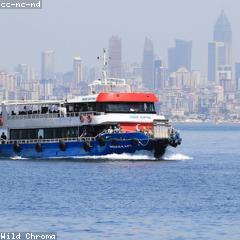
Located at the crossroads of Asia and Europe is Turkey, a dynamic bridge between East and West that is home to thousands of years of rich, storied history and celebrated traditions.
Bordering the Black, Aegean, and Medit…
DEGREE
Required
TYPICAL MONTHLY SALARY
$1,760–$2,890 / month
COST OF LIVING
Low
CAN SAVE MONEY
Yes
HIRING SEASONS
September, January
overview
Located at the crossroads of Asia and Europe is Turkey, a dynamic bridge between East and West that is home to thousands of years of rich, storied history and celebrated traditions.
Bordering the Black, Aegean, and Mediterranean Seas, Turkey boasts an abundance of postcard-worthy views, its landscape encompasses rolling hills, rocky mountains, turquoise beaches, and everything in between.
This varied terrain makes Turkey the perfect stomping grounds for a slew of exciting activities — from hiking and mountaineering to snorkeling and hot air balloon rides, you’ll find it all here!
After a long day outdoors, you’ll certainly appreciate the country’s exquisite culinary scene — its diverse gastronomy reflects the blend of cultural influences that have shaped Turkey into the nation it is today.
From honey-drenched baklava to juicy, aromatic kabobs, you’ll have no shortage of opportunities to explore Turkish culture through the country’s mouthwatering food.
History & Culture You don’t need to be a history buff to appreciate the slew of world-renowned historical sites that Turkey is famous for.
While the Republic of Turkey was officially founded in 1923, the region is home to some of the oldest settlements in the world — in Turkey’s Konya Province, for instance, you’ll find the archeological site Catal Hoyuk, which contains a maze of mudbrick homes built by settlers some 8,800 years ago.
Ancient Anatolia, which many synonymize with modern-day Turkey, is also the land of epic histori…
qualifications
Each country has its own requirements and qualifications when it comes to teaching.
Some require a bachelor’s degree in any field.
In others, you’ll qualify with only a high school diploma and your TEFL certificate.
Some countries have strict visa requirements that may disqualify you based on your citizenship or criminal background. Let’s take a look at the qualifications needed for teaching English in Turkey.
Education You will need to possess a bachelor’s degree in any subject in order to teach in Turkey.
Citizenship There are no specific citizenship requirements to teach English in Turkey, though some employers might prefer to hire citizens of the United States, United Kingdom, Canada, Ireland, Australia, New Zealand, or South Africa.
English Fluency If you are not a citizen of one of these countries, you will be expected to be fluent in English and speak at a native level to be considered for teaching jobs.
Background Check While a 100% clean criminal record check is not generally a requirement to teach in Turkey, depending on your consulate and nationality, you might be required to submit a police clearance certificate when applying for your work permit/work visa.
In addition, some schools, especially international schools, might ask teachers to undergo a criminal record check during the application process.
Medical Check A medical check is not required to teach in Turkey, though certain schools might require it.
TEFL Certificate A TEFL certificate is highly advantageous…
job types
Turkey presents a strong market for English teachers.
In the past decade, the Turkish government and Ministry of National Education implemented a number of policies to develop foreign language instruction in the Turkish public school system, with a special focus on the English language.
As a result, there are ample opportunities to find work teaching English in Turkey today.
Most TEFL certified English teachers will find jobs at private language schools, though it is also possible to secure a position at a private or international school in Turkey if you meet the required qualifications.
Private Language Schools Private language schools are privately run and typically for-profit language training centers that can cater to students of all ages, backgrounds, and abilities.
Many school-aged students will attend private language schools to supplement their public or private school language education, and adults will often attend private language schools to develop their foreign language competency and thereby advance their professional and career options.
Unlike public or private schools, private language schools specialize solely in the teaching of foreign languages.
Class sizes at private language schools will typically be small — teachers might instruct a handful of learners of the same language level, or conduct private one-on-one lessons.
Private language schools in Turkey cater to a wide array of students, from young children to teenagers to adults, and the majority of your…
applying
Now that you’ve explored the job types available to you, it’s time to begin the application process!
There are several steps to take to find a job teaching English in Turkey, and we have them all outlined here below.
Heads up!
The timelines for your job application process and for gathering documents for your visa may overlap. You’ll want to be working on both processes at roughly the same time.
Be sure to check out our Turkey Timeline, as well as the Applying for the Visa section for more information and to make sure you are staying on top of your visa documents while applying for teaching positions.
Step 1: Prepare Your Initial Application Materials Resume & Cover Letter Your resume and cover letter are the keys to connecting with schools and beginning the application process.
International employers look for specific elements in a resume that may differ from what you’re used to seeing domestically.
To take a deeper dive into international resumes and cover letters, visit the Resume and Cover Letter section!
Once you’ve updated your resume and cover letter to meet the recommended international standards, submit your draft to your Student Affairs Advisor for review.
Step 2: Determine Your Preferences A major part of the teaching abroad experience is enjoying where you’ll actually be living!
Do you have a preference when it comes to your daily routines and surroundings?
Do you want to live in the bustling capital city of Istanbul?
Or do you crave a picturesque, small town exp…
accepting
Congratulations on your job offer(s)!
If you’ve been offered a position from a school in Turkey and you’ve followed our previous advice, you’re already off to a great start.
But what’s next?
Determining whether or not the offer is right for you.
To help make this decision, follow the recommendations below by reviewing the basics.
Whether you have one offer or several, the key elements you’ll want to take note of are: salary, working hours, vacation days, sick days, housing, airfare, insurance, and bonuses. Let’s take a closer look at what to expect with each of these elements.
Review the Basics Salary The average starting salary for a first-year English teacher in Turkey is 5,850 to 9,600 TRY (Turkish lira) per month.
Anything significantly lower or higher should make you ask a few questions.
If the reason for the pay difference is obvious, like you’ll be in a rural location with a low cost of living or working longer than average hours, you may find that you’re okay with it.
But don’t accept a contract that is paying you less for doing the same amount of work the average English teacher does, or one that doesn’t fit into your work-life-travel balance.
Working Hours Teaching English in Turkey can be a part-time or full-time gig, though the latter is more common and to be expected if you are formally employed on a work visa. However, there’s more than just the total number of working hours per week (typically 30-40 hours) to consider.
Will you have to work in the morning for a…
visa
The word “visa” tends to provoke daunting images of endless red tape and paperwork but we’re here to ease your anxiety and hopefully have you zipping through this process like a pro. Below, we’ll outline two common visa routes for foreign English teachers in Turkey.
As is always the case with any of the visa advice we provide, please be sure to cross-check this information with your local Turkish consulate or embassy to ensure you are getting the most up-to-date, accurate, and personalized instruction there is!
Visa Types Work Permit What is it?
A work visa will allow you to relocate to Turkey for employment purposes.
In order to obtain one, you’ll need to have accepted a contract with a Turkish employer.
The first and best option for working in Turkey is to obtain a work permit/work visa.
In order to get this visa type, you’ll need to have accepted a job offer with a Turkish school or employer willing to sponsor your visa process.
If you can manage to do this, your hard work will pay off with peace of mind down the line in the form of benefits and job security, as outlined by ITA alumni Valerie D., who taught in Istanbul: “My school provided the work visa.
I would recommend looking for a school that enables you to work legally and receive a visa because it is more secure and you will probably receive some type of insurance.” A vocabulary note: You are going to hear the term “residence permit” thrown around quite a bit when you’re researching relocation logistics and visas fo…
relocation
In the days, weeks, and months leading up to your move abroad, it’s more important than ever to stay organized and ask yourself: What are the logistics I have to consider and the loose ends I have to tie up in order to thrive in my new home?
Do I have to worry about taxes?
What about health insurance?
And what the heck do I do about a cell phone?
Fear not, TEFL teacher.
In this section, you’ll find the tips, resources, and wisdom to tackle these questions and more!
Review the Basics Health Insurance Although in a perfect world an apple a day would keep the doctor away, in reality, even teachers get sick.
Cue health insurance.
Regardless of the country you end up in, you should always inquire about health insurance before accepting a position.
If health insurance is indeed provided by your employer, it’s imperative that the relevant details are outlined clearly in any contract you sign.
More often than not in Turkey, health insurance is only provided as a benefit if you are formally employed by your school on a work visa.
Even then, depending on your contract, you might have to pay into this insurance and split the cost with your school.
If this is the case, your portion will likely be automatically deducted from your paycheck each month.
Check out the “Accepting the Right Offer” section to learn more!
If health insurance is not included in your contract or if you want to supplement your school’s health insurance plan with a more comprehensive private insurance option, you wil…
timeline
You have finally made it to the end of the Turkey section, no small feat!
Here is all of that wonderful information from the previous section laid out step-by-step and month-by-month before your intended departure date for Turkey.
This timeline is not only for the planners and checklist lovers (although you will love this too!).
It is strongly encouraged for anyone planning a move to Turkey to help keep you on track and organized as you make your way through the process.
Finding a Job In-Person Though jobs in Turkey can be found year round, the peak hiring months are September and January, and schools don’t typically hire in August.
Take your desired start date and subtract from there.
While it may be possible to move some parts of the process along quicker, follow this timeline as closely as possible. 4 months before departure: Begin your research ___ List out your preferences and priorities. ___ Chat and network with ITA alumni and read about alumni experiences. ___ Read through ITA’s resources, watch a Student Affairs webinar. ___ Read about Turkish culture. ___Reach out to your Student Affairs Advisor . ___ Ensure your passport will be valid six months past your anticipated return date or order a new passport. ___ Start saving up so you have enough money in your bank for start-up costs. It’s recommended to have 15,400 – 25,300 TRY saved by the time you arrive. 3 months before departure: Prepare residence permit documents ___ Finalize your international resume and cover le…
alumni
It's so cheap to live here that I don't really track my spending.
My husband and I live an exciting and inexpensive life here in Ankara.
And we aren't living like college students!
Let me put it this way, we are able to take one 3-5 day trip each month and still save around 50% of our salary.
We stay in vacation homes (rentals), fly or take coach buses and eat/drink out for all meals.
We do not, at all, try to pinch pennies when we travel...nor do we count pennies when we're at home in Ankara.
Pouneh E. Ankara, Turkey At my job I worked 28 hours a week and monthly salary was 4,200 Turkish Lira ($1,400).
My school also provided free airfare to Turkey and back home after my contract was completed, and they also provided free housing.
The salary I made was more than enough to live in Turkey and I saved about $1,000 USD a month; however this is not a typical salary for first time teachers.
TED Isparta Koleji is a private school which is part of the TED chain of schools which are a chain of well funded, prestigious schools that have over 30 locations all around Turkey.
I worked in the primary and kindergarten sections at the school, teaching students between the ages of 5 and 9.
I also gave private lessons to adult students on weekends.
I was given two weeks of vacation in the winter as well as having national and religious holidays off.
My school also allowed foreign teachers to have Christmas Eve and Christmas off; however, Turkish teachers were still required to work that day.
…