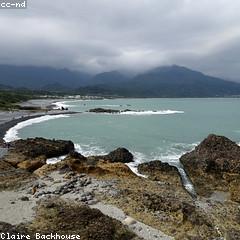
Taiwan considers itself “The Heart of Asia” and indeed this lush island is a welcoming country that has taken steps to ensure the safety, comfort, and joy of locals, visitors, and expats alike. Not only does Taiwan work …
DEGREE
Required
TYPICAL MONTHLY SALARY
$1,635–$2,290 / month
COST OF LIVING
Medium
CAN SAVE MONEY
Yes
overview
Taiwan considers itself “The Heart of Asia” and indeed this lush island is a welcoming country that has taken steps to ensure the safety, comfort, and joy of locals, visitors, and expats alike. Not only does Taiwan work to be welcoming, but they were also the first country in Asia to grant equal marriage rights. From gorgeous mountains to black sand beaches, surf and scuba spots to hiking and hot springs, and endless night markets and themed cafes to world-class dining, Taiwan offers something for everyone.
History Originally inhabited by many indigenous tribes, Taiwan has been colonized several times over the centuries and you can find Dutch, Spanish, French, and Portuguese influences everywhere if you pay attention. Taiwan has a complex history shaped by Indigenous cultures, migration, and periods of Dutch, Spanish, Qing Dynasty, and Japanese rule.
Following World War II, Taiwan came under the administration of the Republic of China (ROC), and its political status remains internationally complex today. Taiwan was ceded to Japan by the Qing Dynasty following the First Sino-Japanese War in 1895, and Japan governed the island until the end of World War II in 1945. You can still see Japanese architecture throughout the island, primarily in the former capital of Tainan, but there are also other remnants. Older generations may also speak Taiwanese Hokkien, Hakka, or Japanese in addition to Mandarin, reflecting Taiwan’s layered history and cultural influences.
Cityscape The cap…
qualifications
Each country has its own requirements and qualifications when it comes to teaching. Some require a bachelor’s degree in any field. In others, you’ll qualify with only a high school diploma and your TEFL certificate. Some countries have strict visa requirements that may disqualify you based on your citizenship or criminal background. Let’s take a look at the qualifications needed for teaching English in Taiwan.
Education Many positions in Taiwan require a bachelor’s degree in any subject from an accredited school, however some schools require only an associate degree. Bear in mind that it may be more challenging to find work without a bachelor’s degree.
Citizenship Work visa eligibility and hiring preferences in Taiwan can vary by employer and government regulations. Many schools prefer applicants from countries traditionally recognized as English-speaking countries for work permit purposes, though requirements and opportunities may vary. Citizens from countries other than the US, Canada, UK, Ireland, South Africa, Australia, New Zealand may find it slightly more challenging to find work.
English Fluency You must be a native English speaker to qualify for the work visa in Taiwan. This applies specifically to English teaching positions. Schools may still be able to legally hire qualified candidates to teach other subjects (such as math, science, or art), provided they hold an appropriate visa and work authorization.
Background Check You must submit a national-level criminal…
job types
Taiwan’s demand for English teachers has remained strong in part due to the government’s ongoing “Bilingual 2030” initiative, which aims to strengthen English proficiency and international competitiveness. Just like in many other Asian countries, Taiwanese parents seek additional English practice outside of their children’s traditional school hours via buxibans. English language buxibans are essentially after-school private language schools that supplement kids’ education. Parents enroll their students in buxibans with the hope of improving their children’s chances of success in school, getting into university, and in their future careers. As such, the market in Taiwan is focused on teaching kids and while jobs teaching adults do exist, they are generally less common and may offer different pay structures or visa sponsorship options compared to children’s programs.
Private Language Schools – Buxibans Buxiban jobs typically involve teaching elementary school aged children, up through adolescents in their final year of high school. Some buxibans and kindergartens employ foreign teachers in early childhood programs, though regulations surrounding foreign teachers working with kindergarten-aged students can be complex and inconsistently enforced. These still common “kindy jobs” may be your best chance for a regular Monday to Friday, conventional school day schedule, and you will often have a co-teacher in the classroom with you if you teach kindergarten. This co-teacher typical…
applying
Now that you know a little more about popular job types in Taiwan, it’s time to start the application process. There are several steps to take to secure a job in Taiwan, and this section should help you through them. Heads up! The timelines for your job application process and for gathering documents for your visa will overlap. You’ll want to begin working on both processes at roughly the same time. Be sure to check out our Taiwan Timeline, as well as the Applying for the Visa section for more information and to make sure you are staying on track with your documents while applying for teaching positions. Because public school programs may have separate government or institutional application requirements, we can provide general resume and cover letter guidance, but we are unable to review or advise on the content of formal application essays or statements of purpose.
Step 1: Prepare Your Initial Application Materials Resume & Cover Letter Your resume and cover letter are the keys to connecting with schools and beginning the application process. International employers look for specific elements in a resume that may differ from what you’re used to seeing domestically. To take a deeper dive into international resumes and cover letters, visit the Resume and Cover Letter section! Once you’ve updated your resume and cover letter to meet the recommended international standards, submit your draft to your Student Affairs Advisor for review.
Demo Lesson Plan A common component of th…
accepting
Congratulations on your job offer(s)! If you’ve followed our previous advice, you’re already off to a great start. But what’s next? Determining whether or not the offer is right for you. To help make this determination, follow the recommendations below. Whether you have one offer, or several, the key elements you’ll want to take note of are: salary, working hours, vacation days, sick days, and bonuses. Let’s take a closer look at what to expect with each of these elements. Review the Basics Salary The average starting salary for a first-year English teacher in Taiwan is $50,000 NTD to $70,000 NTD per month. Anything significantly lower or higher should make you ask a few questions. If the reason for the pay difference is obvious, like a rural location with low cost of living or longer/shorter than average working hours, you may find that you’re okay with it. But don’t accept a contract that is paying you less for doing the same amount of work the average English teacher does, or one that doesn’t fit into your work-life-travel balance.
Working Hours Most teachers in Taiwan work between 20 and 30 hours per week. However, there’s more than just the total number of working hours per week to consider. Will you have to work in the morning for a few hours and then come back for more in the evening? Will you have to work on weekends? Does your school require that you show up an hour before your first class or stay until 6pm even if your last class ends at 3:30pm? Do you get a really…
visa
The word “visa” tends to provoke daunting images of endless red tape and paperwork, but we’re here to ease your anxiety and hopefully have you zipping through this visa process like a pro. Below, we’ll outline the most common visa routes for foreign English teachers in Taiwan, and then dive into a deeper look at the required documents for a work permit there. As is always the case with any of the visa advice we provide, please be sure to cross-check this information with your local Taipei Economic and Cultural Representative Office (TECO). Taiwan’s visa and consular services are typically handled through TECOs, rather than traditional embassies or consulates.
Visa Types Tourist Visa What is it? Many teachers initially enter Taiwan using visa-exempt entry or a visitor visa before transitioning to a work permit and residency process. How do you get one? Entry requirements vary by nationality. Citizens of some countries may enter Taiwan visa-free for a limited stay, while others may need to apply for a visitor visa in advance through a Taipei Economic and Cultural Office (TECO). How long is it valid? Most foreign citizens are allowed to stay for up to 90 days on a tourist visa, but please verify this with your nearest Taipei Economic and Cultural Representative Office in advance.
Work Visa or Work Permit What is it? Both the work visa and work permit allow you to work legally in Taiwan, and the vast majority of schools are able to offer these to foreign teachers. The differenc…
relocation
In the days, weeks, and months leading up to your Taiwan move, it’s more important than ever to stay organized and ask yourself: What are the logistics I have to consider and the loose ends I have to tie up in order to thrive in my new home?
Do I have to worry about taxes? What about health insurance? And what the heck do I do about a cell phone? Fear not, TEFL teacher. In this section, you’ll find the tips, resources, and wisdom to tackle these questions and more! Review the Basics Health Insurance Although in a perfect world an apple a day would keep the doctor away, in reality, even teachers get sick. Cue health insurance. Regardless of the country you end up in, you should always inquire about health insurance before accepting a position.
In Taiwan, your Alien Resident Certificate (ARC) entitles you to their excellent national healthcare coverage, so you won’t need to worry about health insurance! However, you may want to obtain travel insurance to cover the short period of time before you get your ARC, so check with your school to get an estimate of how long that will be or consider purchasing about 2-3 months worth of coverage if you plan on looking for work on the ground. If you do decide to purchase coverage for that transition, you will want to do your own research in order to determine which plan might be the best fit for you, your health needs, and any dependents you might be bringing along. With so many insurance options to choose from, picking out a good provid…
timeline
You have finally made it to the end of the Taiwan section, no small feat! Here is everything you may need to accomplish laid out step-by-step and month-by-month before your intended departure date for Taiwan. This timeline is not only for the planners and check-list lovers (although you will love this too). It is strongly encouraged for anyone planning a move to Taiwan to help keep you on track and organized as you make your way through the process. Applying for Jobs In-Advance 4-6 months before departure: Start doing research __ Read through ITA’s resources, and attend Student Affairs webinar __ Network with ITA alumni, read alumni stories, and watch alumni videos, etc. __ Read about Taiwan culture, etc. __ Reach out to Student Affairs Advisor __ Ensure your passport will be valid at least 6 months past your anticipated return date or order a new passport __ Start saving up so you have enough money in your bank for start-up costs. It’s recommended to have between 60,000 – 95,000 NTD saved by the time you arrive. 3-4 months before departure __ Complete your resume and cover letter __ Print off 2-3 copies of your university diploma __ Order your national level criminal record check *Make sure you do not order your CRC 6 months before departure! 2-4 months before departure __ Start applying for jobs and interviewing __ Accept a job offer and sign a contract following a contract review by Student Affairs __ You will likely be told to arrive on a tourist visa and apply for a work…
alumni
My first school had helped me find an apartment, and my next school I had to find it on my own. After living in the country for a year, it surprisingly wasn't difficult to find an apartment on my own. You can find apartments on Facebooks groups or websites similar to Craigslist in the States, but here it's known as 591. I live in a studio by myself.
Megan N. Changhua, Taiwan In addition to work life transition, my daily life was also a process of transition. Mandarin isn’t an easy language to become accustomed to. I use Google translate and Pleco wherever I go. Ordering food was always a surprise journey because if I though I was ordering noodles and chicken, I would somehow get rice and beef instead. Most meals were a surprise, but I’m always open to new foods. Luckily, I’m only vulnerable to these “surprise meals” in the evenings that my school doesn’t provide meals for.
When I work during lunch and dinner hours, they provide my meals and it’s usually very delicious and certainly foods I wouldn’t know how to order on my own anyway. Fast-forward six months and I can now order rice and beef and actually get rice and beef! Most importantly, I have made friends with the most important people at my local market. I have “the usual” at my bubble tea stand (a Taiwanese requirement), and a close friendship with the fried rice family business.
Jennifer F. Taipei, Taiwan