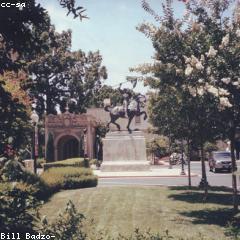
For a country small in size (about the size of the state of South Carolina in the USA), Panama packs a large punch. While it’s impossible to ignore the country’s most well-known feature, the Panama Canal, there is so muc…
DEGREE
Preferred
TYPICAL MONTHLY SALARY
$800–$1,800 / month
COST OF LIVING
Medium
CAN SAVE MONEY
Yes
HIRING SEASONS
February, March, July, August
overview
For a country small in size (about the size of the state of South Carolina in the USA), Panama packs a large punch. While it’s impossible to ignore the country’s most well-known feature, the Panama Canal, there is so much more to learn, explore, and appreciate about Panama!
Landscape & Environment The fact that Panama is the only place on the entire planet where you can see the sun rise on the Pacific and set on the Atlantic sets the stage well for the country’s natural beauty. Panama has endless miles of coastline (1,550 miles to be exact) meaning there is no shortage of breathtaking beaches to explore. Tourist favorites include Coronado, Bocas del Toro, and Contadora Island if you are looking for amenities, restaurants, and nightlife but it’s also quite easy to find quieter, off the beaten path beach destinations. Although Panama has miles of turquoise waters and sandy beaches, the interior section of the country is just as beautiful and biodiverse. Running straight down the middle of the country is the Cordillera Central or Central Mountain range providing ample access to rivers, wildlife, cooler climates, and awe-inspiring peaks. And to top off the country’s natural beauty, over 60% of the country is covered in rainforest which makes it one of Central America’s most forested countries. Even the capital, Panama City, has a rainforest within its city limits! Speaking of Panama City, it’s likely that you will end up living there as an English teacher but if not, you’ll def…
qualifications
Each country has its own requirements and qualifications when it comes to teaching. Some require a bachelor’s degree in any field. In others, you’ll qualify with only a high school diploma and your TEFL certificate. Some countries have strict visa requirements that may disqualify you based on your citizenship or criminal background. Let’s take a look at the qualifications needed for teaching English in Panama. Education A bachelor’s degree is not required to teach in Panama, but it is preferred by most employers. Those who do not have a bachelor’s degree will still have options to teach in Panama. Citizenship There are no specific citizenship requirements to teach English in Panama, though some employers might prefer to hire citizens of the United States, United Kingdom, Canada, Ireland, Australia, New Zealand, or South Africa; and especially those with the legal right to work in Panama. English Fluency If you are not a citizen of one of the above countries, you will be expected to be fluent in English and speak at a native level to be considered for teaching jobs. Background Check A clean background check is not necessary to teach in Panama on a tourist visa. However, on the extraordinarily slim chance you have landed employment with a public or private school willing to sponsor your work permit or should you choose to apply for the Panama Friendly Nations Visa , you will need to have a 100% clean federally-issued criminal record check in order to apply for your work visa. K…
job types
While not quite as prominent as other Latin American countries, Panama offers a stable market for English teachers particularly in the capital and financial hub of Panama City. The demand to learn English in Panama is present and growing. As of 2016, an expansion project of the Panama Canal was completed which doubled the capacity of the original Panama Canal. The expansion project added a new lane to expand the number of ships that can pass through at one time in addition to an increased lane size which allows larger ships to journey through the locks. The expansion has brought even more commerce and tourism via cruise ships to the nation. Therefore, many Panamanians have found an elevated need to seek out English language learning opportunities. Most TEFL-certified English teachers will find jobs at private language schools in Panama, and many also secure positions as private English teachers or tutors. Teaching at a private or international school in Panama is also a possibility, though you’ll need to hold the proper qualifications in order to do so. Private Language Schools Private language schools are privately-run and typically for-profit language training centers that can cater to students of all ages, backgrounds, and abilities. Many school-aged students will attend private language schools to supplement their public or private school language education, and adults will often attend private language schools to develop their foreign language competency and thereby adva…
applying
Now that you’ve explored the job types available to you, it’s time to begin the application process! There are several steps to take to find a job teaching English in Panama, and we have them all outlined below. Heads up! The timelines for your job application process and for gathering documents for your visa may overlap. You’ll want to be working on both processes at roughly the same time. Be sure to check out our Panama Timeline , as well as the Applying for the Visa section for more information and to make sure you are staying on top of your visa documents while applying for teaching positions.
Step 1: Prepare Your Initial Application Materials Resume & Cover Letter Your resume and cover letter are the keys to connecting with schools and beginning the application process. International employers look for specific elements in a resume that may differ from what you’re used to seeing domestically. To take a deeper dive into international resumes and cover letters, visit the Resume and Cover Letter section! Once you’ve updated your resume and cover letter to meet the recommended international standards, submit your draft to your Student Affairs Advisor for review.
Step 2: Determine Your Preferences A major part of the teaching abroad experience is enjoying where you’ll actually be living! Do you have a preference when it comes to your daily routines and surroundings? Do you want to live in the bustling Panama City? Or do you crave a picturesque, mountain town like Boquete?…
accepting
Congratulations on your job offer(s)! If you’ve been offered a position from a school in Panama and you’ve followed our previous advice, you’re already off to a great start. But what’s next? Determining whether or not the offer is right for you. To help make this decision, follow the recommendations below by reviewing the basics. Whether you have one offer or several, the key elements you’ll want to take note of are: salary, working hours, vacation days, sick days, housing, airfare, insurance, and bonuses. Let’s take a closer look at what to expect with each of these elements. Review the Basics Salary The average starting salary for a first-year English teacher in Panama is $800 – $1,500 USD per month. Anything significantly lower or higher should make you ask a few questions. If the reason for the pay difference is obvious, like you’ll be in a rural location with a low cost of living or working longer than average hours, you may find that you’re okay with it. But don’t accept a contract that is paying you less for doing the same amount of work the average English teacher does, or one that doesn’t fit into your work-life-travel balance. ITA graduate Nicky I. received a higher salary based on the hours per week worked, “Depending on how many students I have, I usually make between $1,000 and $1,800 a month. If I have 15 hours of class a week I will make around $1,000 a month. If I take on 25 hours of class a week I usually make around $1,800 a month.” Working Hours Teaching En…
visa
The word “visa” tends to provoke daunting images of endless red tape and paperwork but we’re here to ease your anxiety and hopefully have you zipping through this process like a pro. Below, we’ll outline the most common visa routes for foreign English teachers in Panama, and then dive into a deeper look at the required documents for a tourist there. ITA graduate Mitch B. taught in Panama City, and summarizes their experience with Panamanian visas as follows: “I did not receive a work visa in Panama. They are very uncommon in Latin America. As a Canadian I was able to stay in the country for 180 days with a tourist visa. The other teachers (many who had been there for years) would simply do what they called ‘visa runs’ every 3-6 months taking a trip to Costa Rica, Guatemala or any of the other nearby countries. It seemed like a great excuse to travel.” As is always the case with any of the visa advice we provide, please be sure to cross-check this information with your local Panamanian consulate or embassy to ensure you are getting the most up-to-date, accurate, and personalized instruction there is! Visa Types Tourist Visa What is it? Many English teachers in Panama are hired by an employer “under the table” on a tourist visa. Though this might sound like a slightly questionable practice if you’re unfamiliar with it, in Panama it’s a fairly standard routine for schools and teachers. How do you get one? First, check whether your citizenship allows you to enter Panama visa-free…
relocation
In the days, weeks, and months leading up to your move abroad, it’s more important than ever to stay organized and ask yourself: What are the logistics I have to consider and the loose ends I have to tie up in order to thrive in my new home? Do I have to worry about taxes? What about health insurance? And what the heck do I do about a cell phone? Fear not, TEFL teacher. In this section, you’ll find the tips, resources, and wisdom to tackle these questions and more! Review the Basics Health Insurance Although in a perfect world an apple a day would keep the doctor away, in reality, even teachers get sick. Cue health insurance. Regardless of the country you end up in, you should always inquire about health insurance before accepting a position. If health insurance is indeed provided by your employer, it’s imperative that the relevant details are outlined clearly in any contract you sign. Panama offers private and public options. Many expats opt for the private option as it is more likely the doctors will speak English and is better known for quicker care. With that however, comes a price tag. Thus, you’ll likely want to look into private health insurance options before traveling to Panama, and do your own research in order to determine which health insurance plan abroad might be the best fit for you, your health needs, and any dependents you might be bringing along. With so many insurance options to choose from, picking out a good provider can be daunting for some teachers. One…
timeline
You have finally made it to the end of the Panama section, no small feat! Here is all of that wonderful information from the previous section laid out step-by-step and month-by-month before your intended departure date for Panama. This timeline is not only for the planners and checklist lovers (although you will love this too!). It is strongly encouraged for anyone planning a move to Panama to help keep you on track and organized as you make your way through the process. Use these timelines to nail down your plan of attack, and remember that the peak hiring seasons for English teachers in Panama are February through March and July through August. Avoid applying to jobs in Panama in late December to late February, as most schools will be closed for the holidays and Panama’s Carnival. While it may be possible to move some parts of the process along quicker, follow this timeline as closely as possible. Finding a Job in Advance Please keep in mind that it can be tricky to secure a position in Panama in advance of arriving in the country. Many Panamanian employers won’t want to sponsor a foreign teacher’s costly work permit, so it’s much more common for English teachers to secure employment on the ground on a tourist visa. Nonetheless, it never hurts to try to land a position from your home country! 5-6 months before departure: Begin your research ___ List out your preferences and priorities. ___ Chat with ITA alumni , watch alumni videos and read about alumni experiences in Panam…
alumni
Dive into the culture. Learn the language. See things you never dreamed you'd see. I would definitely recommend teaching in Panama. The people are friendly, the surfing is excellent and the weather is fantastically hot. Mitch B. Panama City, Panama I have wonderful coworkers and teaching the business side of English is really fun! My TEFL class prepared me very well for this position because my lesson plans for FBL are almost the exact format I used in my TEFL classes! Nicky I. Panama City, Panama Do it. You only live once so why not go outside your comfort zone and try something new. If you do not like it you can always go back. I do not regret my decision at all. But once you start, give yourself a few months to really settle. The first two months teaching, I would describe as a transition period if this is your first teaching experience. Once you get the hang of your students, your teaching approach and lesson planning everything is pretty laid back and fun! But the first two months can be stressful adjusting. Overall, DO IT! Nicky I. Panama City, Panama